Apple Watch 2 investigation: What's coming in the next version
We speak to those in the know and round up the best rumours
The Apple Watch 2 rumour mill is bubbling away nicely and you can be sure that in a secret design lab somewhere in Cupertino, the next
Apple Watch sits safely under lock and key.
If you were Tim Cook for a day, what would you demand from the next incarnation of the Apple Watch?
That's the question we posed to a line-up of CEOs, designers, business insiders and industry analysts. Here is the insider wish list for Watch 2.0 together with the latest Apple Watch 2 rumours circulating on the web.
Apple Watch 2: Battery life

Okay, so the Watch 1 makes it through the day, but one of the reasons that Apple had to drop some of the hyped functionality of the original was because they knew it didn't have the juice for it.
Almost everyone we questioned wanted a more robust battery this time around and Daniel Matte, who leads wearables research at Canalys, says that processor tech could yield the biggest gains. Warning: things are about to get really techy.
"It would be great if Apple could utilise Samsung Foundry's 14FF process to manufacture the chipsets in the Apple Watch 2," he said.
"It's already using them in the iPhone, and it would provide major benefits for energy efficiency, which would impact performance and battery life."
The current Apple Watch uses an S1 chip that uses 28nm architecture. The bigger the nanometer size, more power it requires, so Samsung's 14nm could really make an impact.
However, there's not going to be a sudden answer to the battery life question. Even the benefit of 14nm processors will be measured in hours not days. The best we can hope for is an always-on screen that lasts a whole day. A week or month of battery life is not on the horizon.
The
rumour mill agrees, suggesting that instead of drastically improving battery life, Apple will add new features while making sure the Watch gets to the end of one day of use. This is the approach it took with iPads.
Apple Watch 2: Design

"First of all, I believe that no one should have to buy a new watch in just one year, so Tim Cook should thank those who supported the watch, with a free upgrade. It's the least Apple could do," said Daniel Will-Harris (above), a watch designer who sells his timepieces through New York's Museum of Modern Art and the Guggenheim.
He may also be a hopeless tech romantic if he believes Apple will dish out free upgrades.
The multi-talented industrial designer also believes that Apple should refresh its colour palette too. "It needs to lose the garish, childish hues we've had to endure since iOS 7 and use a selection of colour themes ranging from tasteful to playful."
Of course, some of the fallout from the first-gen Watch was that it didn't look, well, Apple, enough. "The first Watch was all about branding, Apple wanted it to look different so people would know you were wearing one, but it was kind of homely and looked like a science project from the 90s," argued Will-Harris.
"I want them to actually want it to look beautiful. And, yes, the whole digital crown thing was complicated, unnecessary and dirt catching, like the Apple Mouse scroll ball that always stopped working. I'd like to see improvements in the original's typography too, with its sloppy, amateurish kerning."
Kerning? That's the spacing of the numbers on the face.
Ultimately, it all comes down to the casing for Will-Harris:
"It needs to be circular because this is the perfect representation for time, because it repeats anew every day. From the first sundials to the phases of the moon, time has always been circular." Will-Harris cites Marc Newsom's Ikepod watches as a reference point.
Are you listening, Sir Jony?
As for web rumours around design,
9to5mac is reporting that new materials will be added to the Apple Watch line-up such as titanium, tungsten, palladium and platinum.
These would sit between the most expensive stainless steel Watch and the Watch Edition and cost $1,000+ which sounds like a move Apple would make.
Apple Watch 2: Display

"The original watch failed where Apple normally excels, in the deep integration of hardware and software," said digital designer Clemens Weisshaar, whorecently collaborated with Audi working with LG on the Watch Urbane LTE.
"You never feel like you can make it yours, which is, in theory, the whole promise of replacing a clock face with a screen and because Apple didn't let designers take over the screen real estate, it felt like the opposite of a 21st century product."
WatchOS 2 has begun to address this with time-lapse videos and personalised Live Photos and albums, so that every time you look at your watch there's a new image waiting for you.
However, Weisshaar believes there is not enough access to the look and feel of the software and wants that to change with 2.0. Daniel Will-Harris agrees: "Just as Android has from the start, they need to open the time telling feature to all the watch designers of the world."
Apple Watch 2: Native apps

"Typically processor upgrades are not a huge deal to me, but because the Apple Watch is so focussed on quick in-and-out interactions, snappier apps could really improve the user experience," says Jeremy Olson, founder and lead designer at Tapity, an Apple Design Award-winning app company.
Most devs' dreams were answered with the news that watchOS 2 would support native apps, running directly on the Watch. While the big change for many in watchOS 2 is more useful apps, it should deliver a performance upgrade too.
Now developers will be able to build apps that run directly on the Apple Watch and this, Olson believes, will make the next offering seriously speedier than its predecessor.
Apple Watch 2: Siri

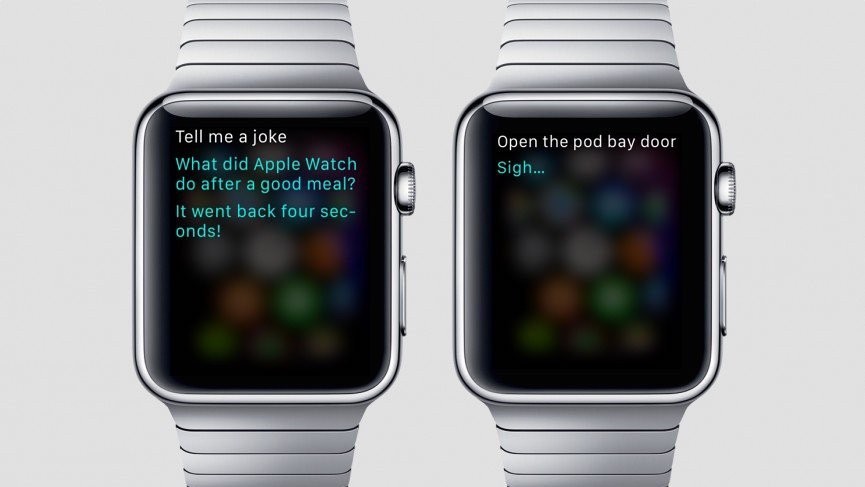
Hey, Siri. Are you going to get any better with the next release? OS 2 has certainly given the AI genie a boost so that it can manage Glances, HomeKit and Maps, as well as providing direct access to workouts. However, Olson also wants it to be more responsive. "I would love to see Siri get a speed boost," he said.
"Which would probably involve internet connectivity and processor improvements. To me, Siri is much more useful on the watch than on the iPhone because it's always right there on your wrist and you can use it hands free by just saying, 'hey, Siri'."
"If this feature was faster and more accurate, I would use Siri on my Apple Watch all the time to set reminders, add notes, text my wife, and do loads of other things on the go," he concluded.
Apple Watch 2: Health sensors

There's been a lot of chatter about the sensors that Apple weren't able to include in the first outing. However, most of the industry insiders we spoke to believed that, because of the space constraints of wearables, we're still a while away from a miniature medical tricorder.
However, Daniel Matte added: "I know many people ask about non-invasive glucose monitoring, but even though Apple has researched this area with great interest, it's extremely unlikely that there will be any viable solutions in the next few years. Any advancement would certainly be a real breakthrough if so."
Apple is also jumping deeper in the health rabbit hole with the release of CareKit, however. A follow up to last year's ResearchKit, CareKit is an open source platform that will allow developers to create health care apps.
The first one showcased at the Cupertino event was made focuses on Parkinson's disease. Another app can be used for people during post-surgery as a means to monitor their recovery.
Other features include tracking medications, physical therapy exercises, recording symptoms like monitoring temperature and photographing wounds to note progression.
Apple Watch 2: GPS

Calibrating the watch through the iPhone's GPS so that it stops misinterpreting distance data needs to be a thing of the past.
"Adding GPS would be a logical addition," said George Jijiashvili, an analyst for CCS Insight, who specialises in wearable technology. "Being able to track your runs and listen to music via Bluetooth headphones without the need to carry your iPhone would certainly appeal to an 'active' segment of consumers and raise the Watch's overall utility."
However, Jijiashvili might be disappointed. The
latest reports are saying that the Apple Watch 2 will not feature GPS, but instead will include a new Wi-Fi chip that can be used to track Apple Watch devices using Wi-Fi router triangulation tech. That means more independence from the iPhone too.
Apple Watch 2: Waterproofing

Our experts were unanimous that v2.0 shouldn't be scared of the water.
"Waterproof it, Apple, please," pleads Bernard Desernauts, CEO of Wristly, the largest independent Apple Watch research platform.
"I'd like to not be afraid to have it on my wrist at the beach or on a boat." In fact, in response to a question put out to Wristly's 'Inner Circle' of Watch owners, waterproofing was found to be the second most wanted attribute of the next Watch. Almost 80% of respondents wished it was more than IPX7 rated, which only covers it up to a depth of 1m.
Apple Watch 2: Untethered
We never thought we'd ever liken the iPhone to a ball and chain, but that's exactly what it feels like sometimes with the Apple Watch. This is why this came out top in Wristly's poll.
"It's important to add to the Wi-Fi capabilities of smartwatches," believes Daniel Matte. "The wireless stacks of both Android Wear and watchOS will be improving over the next year so that users will have connectivity when they're not near their smartphone."
Apple Watch 2: Integration

The Apple Watch is clearly an IoT product: if you have one on your wrist, you might be able to control the lights in your house, or use Apple Pay to travel home on the Tube. Of course, watchOS 2 brought HomeKit into play too, but wearables expert Ramon Llamas, who authored an influential report into the launch of the original, wants more:
"Consider these examples: your Watch senses that you are too cold and sends a message to your Nest thermostat to warm up the room in time for your return. Or, you're coming back from a bike ride, and your Watch sends a message to turn on the lights at your house and open up the garage door."
Bernard Desarnauts goes one further. "When I buy another Watch I'd like it to mean that I could leave my wallet at home and that I'd never have to look for my car or house keys again. It should be able to control my garage door and then seamlessly turn on the lights as I walk in my house, before becoming the remote control for all my domestic media entertainment."
Apple Watch 2: FaceTime camera

"The reason I loved the concept of the Watch in the first place was because it was tomorrow's world, today," reveals Daniel Thomas, a UX designer, who has previously collaborated with Apple.
"I loved the idea of all the tilt-based interactions. The Philips Hue app and Apple Pay. Sending sketches and heartbeats is all well and good, but the thrill quickly wore off for me because there was no real benefit. That would change with FaceTime. If I'm in the future I should be able to videoconference from my wrist. The next Watch has got to have a front-facing HD camera."
According to
9to5mac, the FaceTime camera might be pushed back to a later model than the Apple Watch 2 but it's definitely on the cards. At WWDC this year, Apple indicated its interest in increasing FaceTime functionality – making and receiving video calls from the wrist – so it seems pretty likely.
Apple Watch 2: Smartbands
There has been much written about the infamous 'bottom' strap connector slot that could be used for accessories. Apple loves accessories. So why doesn't it use it as a connector port for a range of all-powerful smartbands? Almost, everyone we spoke to had this on their list of demands to be delivered to the doors of 1 Infinite Loop. "Smartbands would need to be swappable, so that they're capable of new features and functionalities that you may not need all of the time," said Lamas.
"From health and fitness to a more complex haptic notification system."
Daniel Will Harris has some other ideas: "First, they contain a long, flexible battery that can power the Watch for days. Next, they contain an antenna to ensure a clear connection for voice and data. And the spec needs to be open source too, so anyone can build a compatible band."
question
What do you think of the Apple watch 2? is what you will buy? answer me in the comments and subscribe
Abdellah slaoui

/cdn0.vox-cdn.com/uploads/chorus_asset/file/6227655/Samsung-Gear-S2-smart_watch-review-verge03.0.jpg)
/cdn0.vox-cdn.com/uploads/chorus_asset/file/6228139/Samsung-Gear-S2-smart_watch-review-verge08.0.jpg)
/cdn0.vox-cdn.com/uploads/chorus_asset/file/6227657/Samsung-Gear-S2-smart_watch-review-verge14.0.jpg)